ServicesTPO Roofing
TPO Roofing in Speedway
If a flat or nearly flat section of your home keeps leaking through patch after patch, TPO is often the fix that finally holds. We tear off the old layers, correct how water drains and weld a single membrane over the whole area.
A Better Covering for the Low Parts of Your Roof
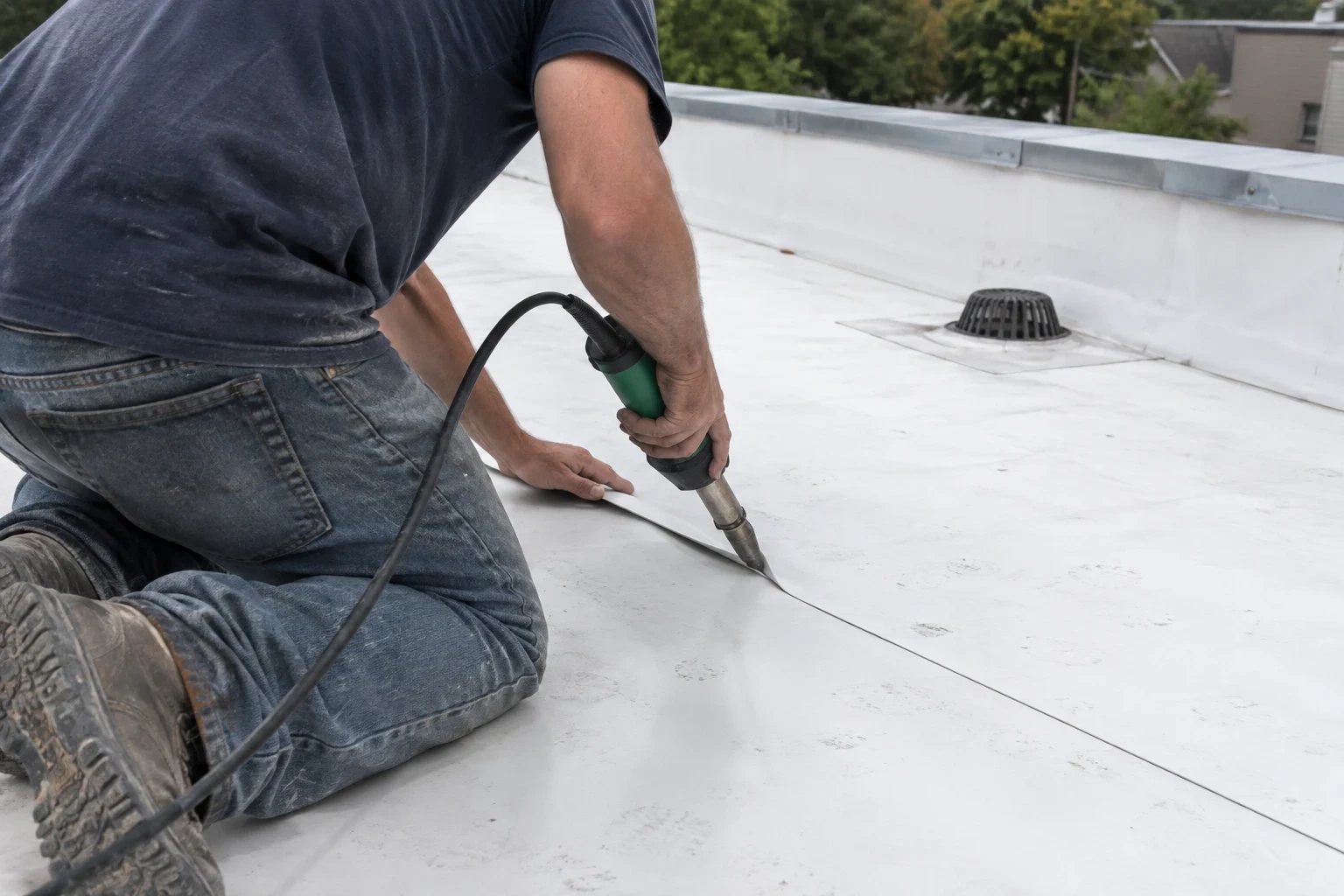
TPO is a white single-ply membrane built for roofs with almost no pitch. It arrives in wide rolls, and the overlaps are melted together with hot air so they act as one sheet. Shingles depend on slope to shed rain, which is why they leak on low pitches. TPO does not depend on slope at all.
Plenty of older houses have a low spot that was added later: an enclosed porch, a rear addition, a carport or a shallow dormer. Those areas usually got rolled roofing or tar and gravel, then years of roof cement patches. When we finally pull them apart, we often find three or four layers sitting on soft wood.
Roofing Speedway has been in business for 14 years, and we are licensed, bonded and insured. On low-slope work we strip everything to the sheathing, so you know the new membrane rests on sound wood and not on old mistakes.
Everything That Goes Into Your New TPO Roof
Stripping the old roof
Rolled roofing, tar and gravel and years of patches all come off until we reach bare wood. A new membrane laid over soft, lumpy layers would just cover up the trouble.
Sheathing inspection and repair
With the wood exposed, we check for rot, dips and old water marks. Bad boards are swapped out before the new roof starts, and you get pictures of everything we uncovered.
Insulation board and better drainage
Insulation board gives the membrane a firm, even surface to bond to. On spots where puddles have formed, tapered board can tilt the water toward an edge or drain.
Hot-air welded seams and fitted flashing
Each seam is fused with hot air and checked along its length with a probe. Vents, pipes and skylights get membrane boots or flashing cut for that opening rather than a dab of caulk.
Clean joints with the main roof
Flat sections usually butt against a wall or a shingled slope. We turn the membrane up the wall, secure it under termination bar and flash the joint into your shingles, the spot where old porch roofs leak most.
Drip edge, gutter tie-in and cleanup
Fresh drip edge finishes the perimeter and sends runoff into your gutters. Debris leaves with us, and we sweep the lawn and driveway for stray nails.
Signs Your Flat Roof Section Needs Attention
- Puddles that linger after rain
- If water is still sitting there a couple of days after a storm, the surface has sagged or never drained properly. Ponding breaks down old roofing quickly, and once a Central Indiana winter freezes it, the ice works at every seam.
- Splits, bubbles and worn patches
- Aging rolled roofing dries out and cracks at the overlaps. Raised bubbles usually mean moisture is caught underneath.
- Layer after layer of roof cement
- Several rounds of black patching tell you the leak keeps moving. Each new patch might last a season.
- Water marks below the low roof
- Brown rings on a porch ceiling or in a back bedroom often lead back to a flat section, most often where it joins the main house.
- Spongy spots underfoot
- Sheathing that flexes when you step on it has likely been soaked for some time. It should be checked before rot reaches the rafters.
How a TPO Job Goes
- 1
Free roof inspection
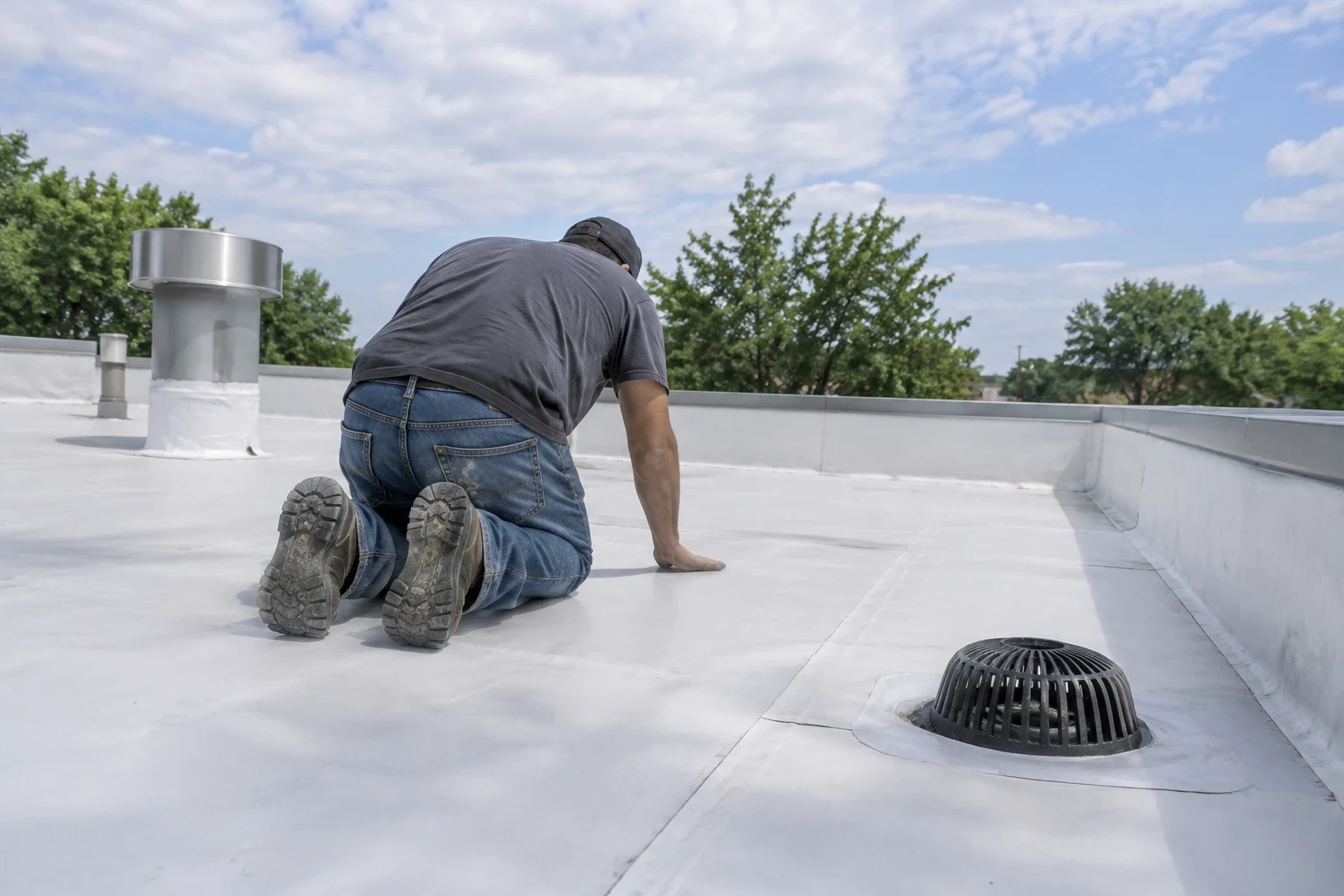
We walk the flat section, look at the ceiling underneath and photograph the seams, edges and any soft spots. Then we tell you honestly whether a repair is enough or the area needs a new roof.
- 2
Line-item estimate
Your written estimate breaks out tear-off, expected wood replacement, insulation and flashing. We also explain how hidden sheathing damage is priced, since no one can see it until the old roof comes up.
- 3
Permits and a dry day
If Speedway requires a permit for your job, we handle the paperwork. We book the work for a stretch of dry weather, and most porch and addition roofs wrap up in one or two days.
- 4
Tear-off and install
We cover plants and windows, remove the old roof and fix the sheathing. Insulation and membrane go down next, and every seam is welded and tested before the crew leaves that day.
- 5
Final look and cleanup
We walk you through the finished roof and point out the flashing work. Then we clean up and sweep the yard with a magnet.
What Moves the Price of a TPO Roof
Residential TPO work usually covers a modest area, so the edges, walls and openings shape the price as much as the square footage does. We set the number only after we have been on the roof. If spreading the payments out would help, ask us about financing when we visit.
- Footprint and layout
- A plain rectangle over a back porch goes down quickly. Angles, step-downs between levels and cramped corners mean more cutting and more welded seams.
- Old layers and the wood beneath
- Every layer we strip adds labor and dump fees. Rotted sheathing is the biggest unknown on an older house, so your estimate lays out exactly how any board replacement will be charged.
- Fixing where water collects
- A section that holds puddles may need tapered board or a new scupper so the water has somewhere to go.
- Flashing details
- Pipes, skylights and wall joints each get their own detail. A low roof wedged between a brick wall and a shingled slope has far more of them than one that stands open on all sides.
Common Questions About TPO on Homes
- Isn't TPO only used on commercial buildings?
- You will see it on strip malls and warehouses, but it suits the flat parts of a house just as well. A porch roof or back addition has the same need as a big flat roof: one unbroken surface that does not depend on slope to stay dry. The job on a house is simply smaller.
- Could you lay TPO right over my old rolled roofing?
- We remove the old material instead. Low sections on older houses tend to hide soft wood and trapped moisture, and covering them seals the trouble in. Stripping to the sheathing lets us repair what is rotten and give the membrane a flat, solid base.
- My shingles are dark. Will a white membrane stand out?
- From the street, most flat sections are out of sight, so it seldom matters. If yours is visible, we can go over the color choices with you at the inspection. And if the shingled part of your home needs attention too, our shingle roofing work can be planned alongside it.
- How long will the work disrupt my porch or addition?
- Small sections usually take a day or two. We only strip as much as we can cover again before we leave, so the room or porch below is never open to the weather overnight.
- What upkeep does a TPO roof need once it is on?
- Very little. Keep leaves and branches off the surface, make sure the gutters along that edge stay clear, and have the seams and flashing looked at after a big storm. Catching a nicked seam early is a small repair rather than a wet ceiling.
Let's Take a Look at That Low Roof
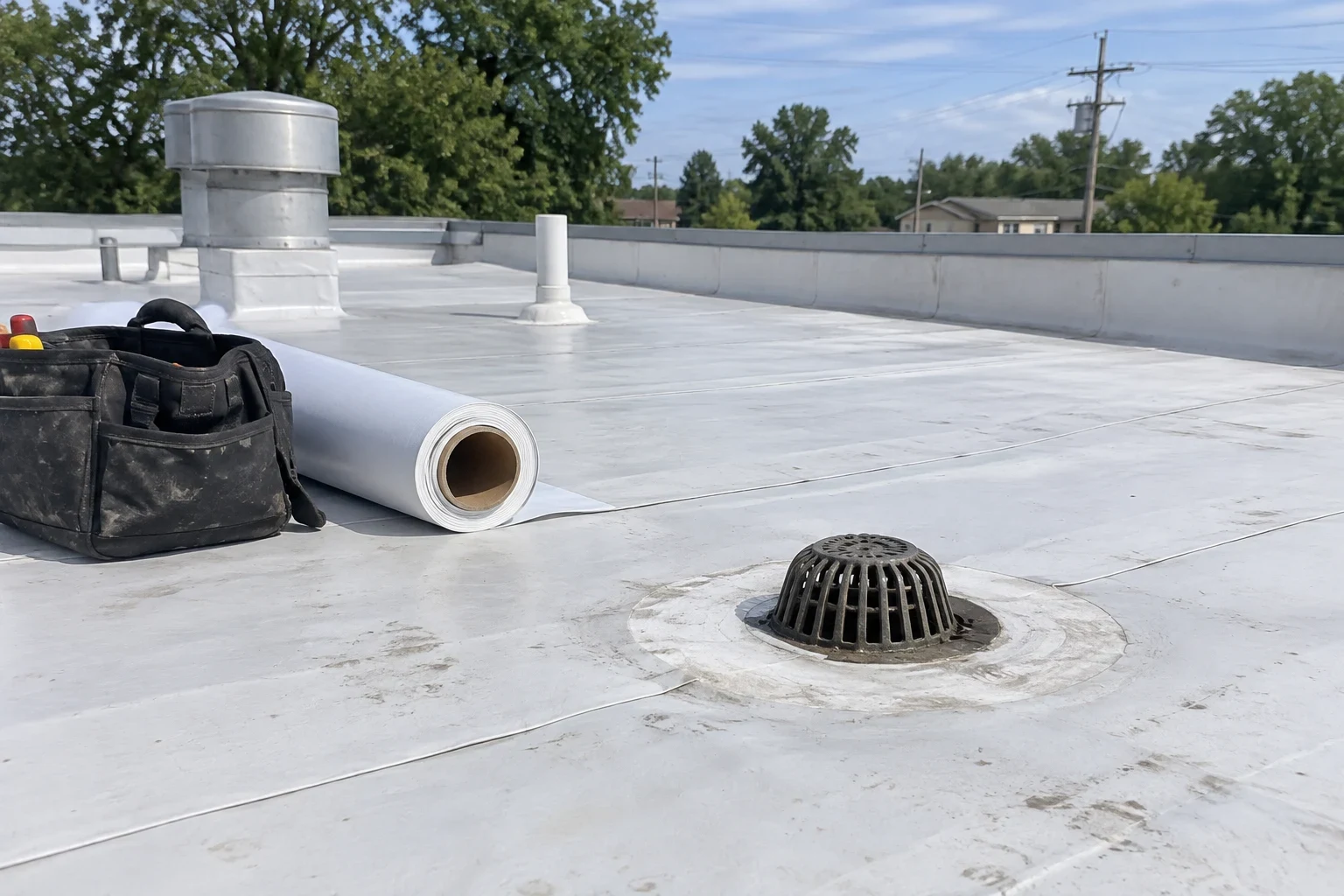
We will check the surface, the seams and the ceiling below, then tell you plainly whether it needs a repair or a new membrane. There is no charge for the visit.